










A 10G uplink that will not come up usually does not fail because the switch is bad. More often, the problem starts earlier – someone rushed to buy SFP modules online, matched only the speed, and missed the coding, fiber type, wavelength, or reach. That is an expensive mistake when you are trying to restore a link, finish a rollout, or keep spare inventory tight.
For IT buyers and network teams, optics are small parts with outsized consequences. The right module gets a switch stack, firewall uplink, server NIC, or aggregation link back in service fast. The wrong one can leave you with a non-functional port, a preventable return, and lost time on a change window. Buying online is efficient, but only if you evaluate the module the same way you would evaluate any other enterprise hardware component – by exact compatibility and deployment fit, not by a vague product title.
How to buy SFP modules online the right way
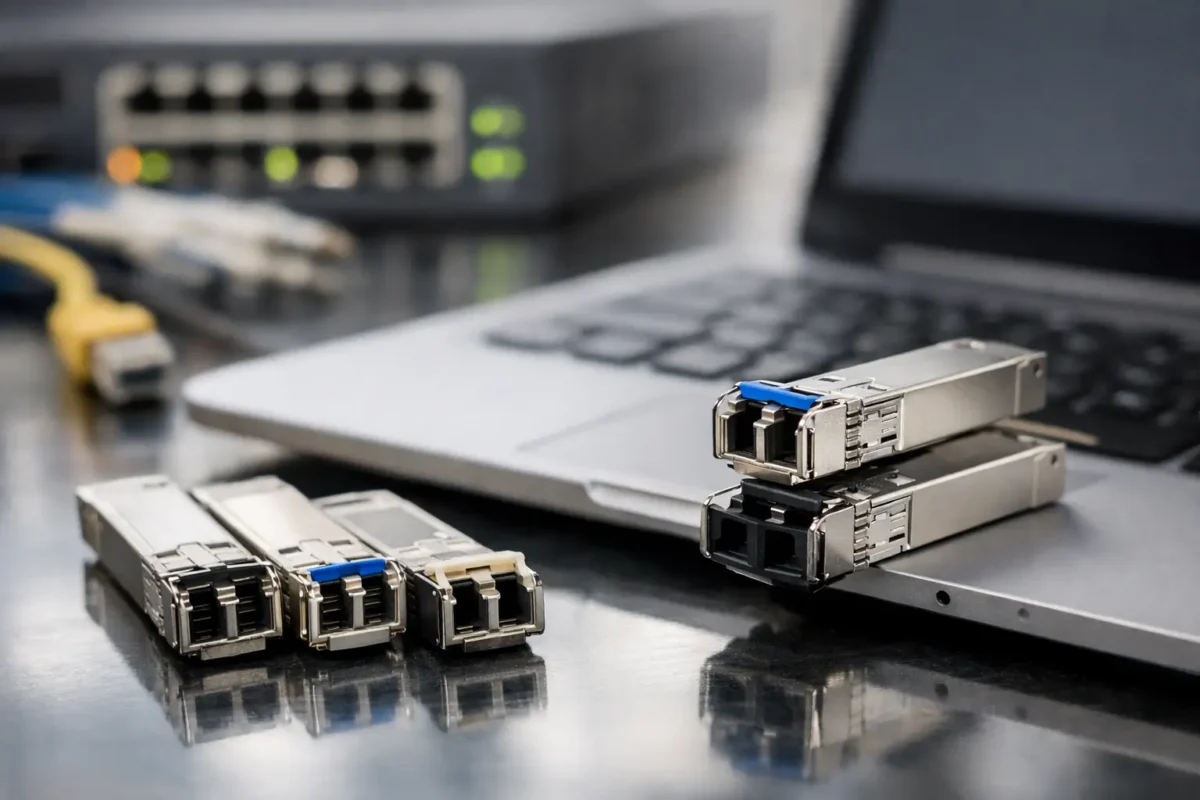
The first filter is the form factor. SFP, SFP+, and QSFP are not interchangeable just because the connector looks familiar in a thumbnail image. A 1G SFP module belongs in a 1G SFP port. A 10G SFP+ module belongs in an SFP+ port. A 40G QSFP+ module is a different category entirely. Buyers handling mixed environments often know this already, but replacement orders still go wrong when teams order from memory instead of checking the exact port type on the device datasheet or chassis label.
After form factor, speed is the next hard requirement. Common examples include 1G SX or LX optics, 10G SR or LR modules, and copper SFP transceivers for short patching. Speed mismatches are obvious on paper, but confusion starts when ports support multiple rates or when legacy gear has narrower support lists than newer platforms. If the switch vendor certifies specific optics at specific rates, treat that as the baseline.
Vendor compatibility matters more than many buyers want to admit. If you are reviewing optic compatibility before purchasing, our How to Select SFP Modules Without Guesswork guide explains the key checks in more detail. Some platforms are permissive. Others are strict about EEPROM coding and may reject non-approved optics or generate persistent warning messages. Cisco, HPE, Juniper, Fortinet, and other enterprise vendors all have platform-specific behavior that affects optic choice. If you are buying for a branded environment, do not stop at “10G SR” and assume any module will do. Check whether the module is OEM-branded, vendor-coded, or explicitly listed as compatible with the exact switch, router, firewall, or NIC model in your rack.
What to check before you buy SFP modules online
Fiber type is where many online orders go sideways. Multimode and single-mode are not interchangeable, and neither are their distance expectations. A 10G SR optic is typically used over multimode fiber for shorter runs inside buildings or between nearby racks. A 10G LR optic is built for single-mode fiber and longer distances. If the installed cabling plant is OM3 or OM4 multimode, ordering LR optics because they looked like a better deal can create more trouble than savings. Organisations using Cisco networking equipment often choose the Cisco SFP-10G-SR Module for short-range multimode fibre deployments where reliable 10G connectivity is required.
Wavelength and connector type also need a clean match. Most standard enterprise optics use LC connectors, but that is not universal across all module types and applications. Wavelength becomes especially important when you are replacing bidirectional modules or working in environments that already use CWDM or DWDM optics. In those cases, you are no longer buying a generic replacement. You are matching a specific optical design.
Distance should be treated as a real deployment spec, not a marketing line. If the run is 300 meters and your optic supports that only under ideal fiber conditions, you are buying too close to the edge. Patch panels, splices, aging plant, and connector contamination all affect performance. A little headroom is usually cheaper than a truck roll.
Copper SFP modules deserve separate attention. RJ45 transceivers are convenient for short links and mixed copper environments, but they can run hotter and draw more power than fiber optics. Some switches also have caveats around port density or supported distances when copper transceivers are installed. They are useful, not universal.
Price matters, but so does module quality
Online buyers naturally compare by price first, and that makes sense. SFP modules are often purchased in batches, stocked as spares, or added to discounted refresh projects where every line item is under scrutiny. But the lowest price is not always the lowest cost.
The trade-off usually comes down to OEM versus compatible optics, and new versus used or surplus inventory. For longer-distance fibre deployments, many buyers consider the Cisco SFP-10G-LR Module when single-mode connectivity and extended reach are required. OEM modules give you the closest alignment to manufacturer expectations, which matters in sensitive environments or support-bound deployments. Compatible optics can reduce acquisition cost significantly, especially for older switching estates or large rollouts where budget pressure is real. The key is to buy from a source that states compatibility clearly, identifies exact model numbers, and offers warranty and returns protection. If a listing is vague, the discount is probably not worth the troubleshooting time.
Used and surplus optics can also make sense. Many enterprise buyers are supporting legacy infrastructure that is still operational but no longer easy to source through traditional channels. In that case, availability may be more valuable than pristine packaging. What matters is tested condition, accurate coding, clear labeling, and a seller that understands enterprise replacement parts rather than generic consumer electronics.
Listings that save time versus listings that create returns
A strong product listing should do more than repeat the category. It should identify the exact model, speed, media type, connector, wavelength, reach, and compatibility context. If you see a listing that simply says “10G SFP+ module” with no detail, you are not looking at a serious procurement-grade offer.
Good listings help buyers move fast because they reduce ambiguity. That matters for MSPs juggling client hardware, procurement teams processing multiple SKUs, and administrators trying to close out a maintenance task before the window ends. Exact nomenclature is your friend here. Part numbers, interface standards, and vendor references are what separate a useful listing from guesswork.
For example, there is a meaningful difference between ordering a Cisco-coded 10GBASE-SR SFP+ transceiver for a Catalyst switch and ordering a generic 10G optic that happens to fit physically. The first choice is procurement. The second is a gamble. The same logic applies across HPE, Dell, Juniper, Fortinet, Lenovo, and mixed-brand environments.
When buying online is the better option
For many teams, online sourcing is not a fallback. It is the fastest path to stock visibility, discounting, and broader brand coverage. A strong online hardware retailer can give you access to current and legacy optics in the same catalog, which is useful when one project needs new 25G components and another needs replacement 1G modules for installed gear.
This is also where pricing pressure works in your favor. High-volume online resellers often carry a mix of branded, compatible, and surplus inventory that traditional channels do not present as efficiently. That gives buyers room to make a deliberate choice. You can prioritize OEM where support policy requires it and buy cost-effective alternatives where the environment allows it. Green Code UK, for example, competes on exactly that kind of inventory depth and deal-driven procurement flexibility.
Still, speed should not override verification. Before checkout, confirm the device model, port type, optic part number, cabling type, and required distance. If the deployment is unusual – stacked switches across older multimode fiber, firewall HA links with strict vendor checks, or a server uplink using a specific NIC firmware matrix – treat the optic purchase with the same discipline you would apply to memory, drives, or power supplies.
Common mistakes buyers make when they buy SFP modules online
The most common error is assuming all optics with the same speed are equivalent. They are not. Coding, wavelength, reach, and media all matter. The second error is buying for the current symptom instead of the full environment. If a link is down, buyers often replace the module first without checking the fiber type, the far-end optic, or whether the existing part was already a special case.
Another frequent issue is ignoring platform behavior. Some switches accept third-party optics without complaint. Others log warnings, disable unsupported modules, or require specific firmware conditions. If uptime matters, do not rely on forum folklore when the exact hardware model can tell you what you need.
Finally, some buyers over-prioritize futureproofing and order beyond the actual need. A longer-reach optic or higher-spec module is not automatically better if it complicates compatibility or mismatches the installed plant. Buy for the link you are deploying, not the one you might build years later.
If you need to buy SFP modules online, the fastest route is not the first listing with a low price. It is the listing with the right model, right coding, right fiber match, and a seller that treats enterprise optics like infrastructure parts, not accessories. Get that right, and a small transceiver stays what it should be – a quick fix, a clean deployment, and one less problem in the rack.
FAQ
Q1: What should I check before buying SFP modules online?
A: Verify the port type, speed, fibre type, wavelength, distance and device compatibility.
Q2: Are all 10G SFP+ modules interchangeable?
A: No. Compatibility depends on coding, wavelength, fibre type and supported hardware.
Q3: Should I choose OEM or compatible SFP modules?
A: OEM modules provide manufacturer alignment, while compatible optics can reduce costs when properly specified.
Q4: What is the difference between SR and LR optics?
A: SR optics are typically used with multimode fibre for shorter distances, while LR optics are designed for longer single-mode fibre links.
Q5: Can used SFP modules be a good option?
A: Yes. Tested used or surplus optics can offer excellent value for replacement and legacy network projects.
