











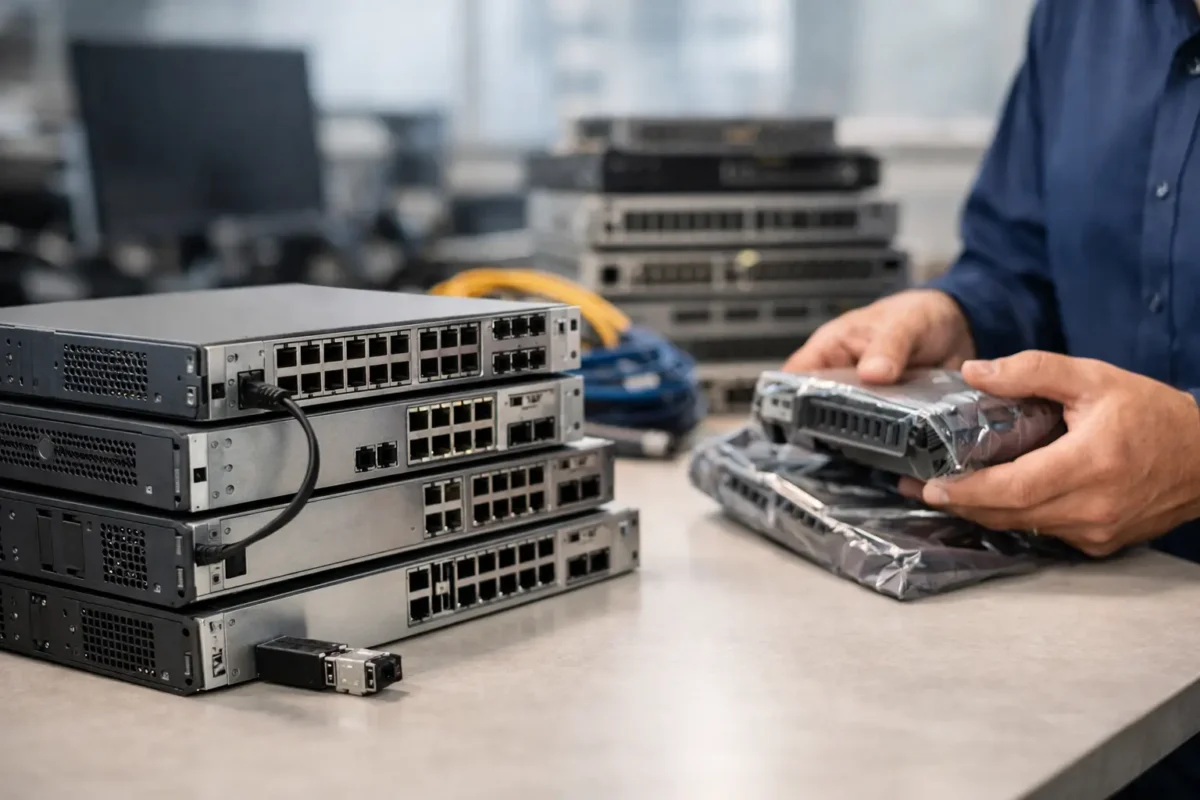
Budget pressure usually shows up first in the network closet. A failed switch, an aging firewall, or a branch expansion can force a purchase fast, and new OEM pricing does not always fit the timeline or the budget. That is where refurbished enterprise network equipment becomes a practical buying option for IT teams that need branded hardware, known compatibility, and real cost control.
For many buyers, the question is not whether refurbished gear can work. The real question is whether the specific model, condition, warranty, and seller support line up with the deployment. In some cases, refurbished is the smart move. In others, paying for current-generation hardware is the better call. The value is in knowing the difference before the PO is approved.
Why refurbished enterprise network equipment gets serious consideration
Enterprise buyers are rarely shopping for hardware in the abstract. They are buying a Cisco switch with a specific uplink configuration, a Fortinet appliance that fits an established security stack, or an HPE server component needed to keep an installed base running. Refurbished inventory matters because it gives buyers access to exact model numbers and legacy platforms that may be difficult to source new.
Price is the obvious driver, and it is a strong one. Refurbished enterprise network equipment can reduce acquisition cost substantially compared to factory-sealed stock, especially on discontinued or previous-generation platforms. That matters for small and mid-sized businesses, managed service providers balancing margins, and enterprise teams managing refresh cycles across multiple sites.
But price alone is not the whole case. Availability often matters just as much. If a failed router needs replacement this week, waiting on long lead times for a new unit may not be realistic. Refurbished stock can close that gap, particularly when buyers need a like-for-like replacement to avoid redesign, retraining, or licensing complications.
Where refurbished makes the most sense
The best use case for refurbished equipment is usually an environment where platform stability matters more than having the newest release. Branch switching, access layer upgrades, spare hardware pools, test labs, secondary sites, and replacement purchases are all strong candidates.
If your environment is already standardized on a certain OEM family, buying refurbished can keep the infrastructure consistent without forcing a broad refresh. That is valuable when the team already knows the interface, the optics are already in place, and the racks, power, and management processes were built around that hardware generation.
There is also a financial advantage in staged upgrades. Instead of replacing an entire network core-to-edge in one cycle, some organizations use refurbished hardware to extend the life of working designs while reserving budget for projects that actually require current-generation performance. That is not a compromise by default. Sometimes it is the more disciplined procurement decision.
What to check before you buy refurbished enterprise network equipment
The first checkpoint is model accuracy. Enterprise hardware is full of near-identical SKUs with meaningful differences in port speed, PoE budget, airflow direction, included rails, power supplies, uplink modules, and licensing eligibility. A switch family name is not enough. Buyers should validate the exact part number and the hardware revision if the deployment is sensitive to compatibility.
Condition grading matters too, but functional completeness matters more. Cosmetic wear is usually acceptable in a rack environment. Missing power supplies, incorrect transceivers, outdated firmware, or absent mounting hardware are more expensive problems than scratches on the chassis. Ask what is included and make sure the shipped configuration matches the installation plan.
Warranty is another practical filter. Refurbished does not need to mean risky, but support terms should be clear. A solid warranty and return policy can reduce buying friction, especially for procurement teams sourcing replacement units under time pressure. That is one reason many buyers prefer established hardware resellers over anonymous marketplace listings.
Testing standards should also be part of the evaluation. Buyers do not need a marketing speech. They need to know whether the equipment has been inspected, powered on, validated for core functions, and checked for major defects. The right level of testing depends on the hardware type. A firewall, a stackable switch, and an optics module do not present the same risk profile.
The trade-offs are real, and they are manageable
Refurbished hardware is not a universal answer. If you need the latest throughput, modern silicon efficiencies, expanded automation features, or long OEM roadmap support, buying new may be the better option. That is especially true for data center builds with high-density requirements, edge deployments with evolving security demands, or projects tied to long support windows.
Licensing can also complicate the decision. Some platforms depend on transferable subscriptions, support entitlements, or feature licenses that do not automatically move with the hardware. Buyers need to verify what is embedded, what must be purchased separately, and what is not available in a refurbished scenario. Ignoring this step can erase the initial savings very quickly.
Power and efficiency should be considered as well. Older equipment may be cheaper up front but less efficient over time. In a small branch that difference may be negligible. In a larger footprint with dense racks and rising utility costs, it becomes more relevant. This is one of those areas where the cheapest purchase price is not always the lowest total cost.
Brand familiarity matters in the refurbished market
One reason the refurbished category remains strong is that enterprise buyers trust known OEM platforms. Cisco, HPE, Dell, Juniper, Fortinet, Lenovo, and similar brands have established install bases, broad documentation, and predictable deployment behavior. For experienced IT teams, buying a refurbished model from a familiar product line is often lower risk than buying a lesser-known new device with uncertain long-term support.
This is especially true when the goal is continuity. A network admin replacing a failed switch in an existing stack is not looking for novelty. They want the right chassis, the right software path, the right optics compatibility, and the least amount of disruption. Refurbished inventory supports that buying pattern well.
For MSPs and resellers serving multiple customer environments, the same logic applies. Standardized hardware families simplify spares, reduce training overhead, and make it easier to maintain predictable service delivery. Refurbished stock can support those operational advantages while keeping margins tighter than all-new procurement.
How smart buyers evaluate sellers
A good refurbished hardware seller should make it easy to verify technical details quickly. That means clear model numbers, direct product categorization, visible inventory, and enough specification detail for experienced buyers to make decisions without wasting time. The process should feel like enterprise procurement, not guesswork.
Stock depth is another major factor. Buyers often need more than one unit, or they need related items in the same order such as transceivers, rack accessories, or replacement power supplies. A seller with broad inventory across switching, routing, security, servers, and accessories can reduce sourcing delays and simplify purchasing.
Commercial terms matter too. Warranty coverage, returns, discount visibility, and payment flexibility all affect whether a deal is actually usable in a business setting. That is part of why buyers turn to established online hardware retailers such as Green Code UK when they need aggressive pricing without giving up procurement basics.
Refurbished is not second-best procurement
There is a persistent misconception that refurbished equipment is only for buyers who cannot afford new. In practice, many experienced IT teams choose it because they understand the deployment better than anyone else. They know when a previous-generation switch is perfectly adequate, when a replacement firewall needs to match the installed environment exactly, and when preserving budget creates more value elsewhere.
That is the core advantage. Refurbished enterprise network equipment gives buyers more control over cost, replacement speed, and platform continuity. It works best when the purchase is specification-driven, compatibility-conscious, and backed by clear warranty terms.
If your next project is a like-for-like replacement, a branch rollout, a lab build, or a budget-sensitive expansion, the smartest buy may not be the newest box on the shelf. It may be the right model, at the right price, available right now.
