












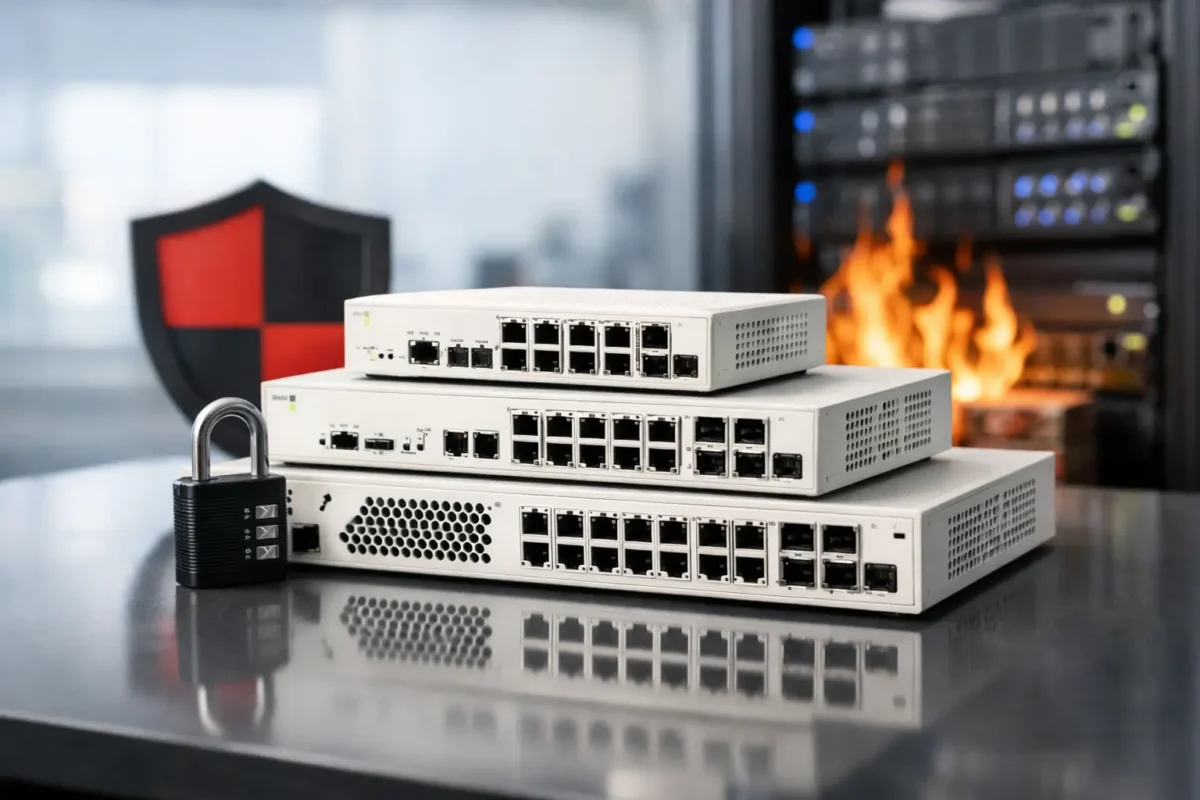
A firewall quote looks great until you notice the missing license, the wrong port mix, or a model that is already near end of support. That is why buyers looking for discount Fortinet firewall appliances need more than a low number on the cart page. The real value is getting the right FortiGate platform, in the right condition, with pricing that still makes sense after support, subscriptions, and deployment are factored in.
Fortinet remains a top choice for SMB, branch, campus, and distributed enterprise security because the lineup covers a wide range of throughput, interface density, and security service requirements. For IT teams and procurement buyers, the appeal is straightforward – strong brand recognition, broad deployment familiarity, and plenty of model availability across current, clearance, and used inventory. But discounted buying works best when you know exactly what is being discounted.
How to evaluate discount Fortinet firewall appliances
Start with the model number, not the marketing label. In Fortinet buying, a small suffix or generation change can affect interface speeds, SSL inspection capacity, rack form factor, and support lifecycle. A discounted appliance may be a great buy for a branch refresh, but a poor fit for an edge deployment if traffic growth or inspection requirements are already pressing against the hardware ceiling.
Throughput claims also need context. Buyers comparing discounted security appliances may also find our FortiGate Firewall Features That Matter guide useful when evaluating performance and security capabilities. Firewall throughput, threat protection throughput, IPS throughput, and NGFW throughput are not interchangeable. If your environment depends on deep inspection, SD-WAN, VPN concentration, or application control, the lower real-world figure matters more than the headline number. A steep discount on an undersized unit usually creates a second purchase sooner than planned.
Port configuration is another common miss. Some buyers focus on raw performance and forget interface count, copper versus SFP, PoE requirements, or whether 10GbE uplinks are mandatory. That is less of a problem in greenfield builds where you control the full design. In mixed environments with legacy switching, ISP handoff constraints, or branch standardization, exact interface compatibility matters as much as price.
Where discounted Fortinet value actually shows up
The best pricing usually appears in three areas: previous-generation stock, excess inventory on still-relevant models, and used enterprise hardware. Each has a place, but they are not equal.
Previous-generation FortiGate appliances can be a smart buy when the support window is still healthy and the deployment target is stable. A branch office, small business edge, or lab environment often does not need the newest hardware revision if the performance profile is already sufficient. In those cases, discounted older models can lower capex without introducing unnecessary risk.
Overstock and clearance pricing on newer appliances is where many buyers find the cleanest balance. You may get current or recent-generation hardware at reduced pricing without stepping too far back on lifecycle. For procurement teams trying to standardize across locations, this is usually more attractive than mixing multiple generations just to shave a bit more off the purchase price.
Used hardware brings the lowest upfront pricing, but it demands the most discipline. Condition grading, warranty coverage, return terms, and verified functionality matter. For replacement units, test labs, temporary expansions, or cost-controlled branch deployments, used Fortinet hardware can be practical. For primary edge security in high-risk environments, it depends on how much certainty you need around lifespan and support eligibility.
New vs used discount Fortinet firewall appliances
New appliances are easier to justify when uptime, support continuity, and subscription renewals are central to the deployment. You get cleaner chain-of-custody, simpler rollout planning, and fewer questions around prior ownership or wear. For enterprise procurement, that reduction in uncertainty often offsets a higher unit cost.
Used appliances become more compelling when the use case is narrow and well defined. If you need a matching replacement, an interim unit, a secondary location firewall, or hardware for training and validation, the savings can be substantial. The key is to verify whether the exact model supports the services you need today, not just the traffic it handled in its original deployment.
Licensing is where many discount purchases go wrong. A Fortinet appliance without the right subscriptions may still function as a firewall, but advanced security features, support access, and updates can depend on active service status. Before purchasing, confirm whether the appliance includes any transferable or active licensing, and price the unit with realistic renewal assumptions. A low hardware price can stop looking low once you add the services your policy set requires.
What IT buyers should check before purchase
Spec-driven buying is the safest way to shop discounted security hardware. For Fortinet, that means matching the appliance to your actual deployment profile, not simply selecting the model with the biggest markdown.
First, look at expected traffic patterns. If encrypted traffic inspection is part of the design, focus on the relevant performance metric rather than basic firewall throughput or if you are supporting remote users or site-to-site tunnels, review VPN capacity and concurrent session limits. If the firewall will anchor SD-WAN or segmented branch services, interface layout and policy scale become more important.
Second, review lifecycle position. A discount only helps if the platform remains serviceable for the period you intend to use it. End-of-sale and end-of-support timelines affect patch planning, renewal options, and long-term risk. Some buyers are comfortable with shorter remaining lifecycle if the use case is temporary or noncritical. Others need standardization across multiple sites for several years and should buy accordingly.
Third, check physical and operational fit. That includes rack size, power requirements, fan noise for office deployments, and whether your team needs desktop, branch, or data center form factors. It sounds basic, but mismatched form factor is still a frequent purchasing mistake, especially when a discounted SKU looks close enough to the intended model.
Why discounted Fortinet can outperform generic savings
Not all savings are equal. Buying a cheaper firewall from a less familiar platform may reduce invoice cost, but increase migration time, policy conversion work, training needs, and support friction. Fortinet discounts tend to be more valuable because they preserve platform continuity. Your team likely already understands FortiOS conventions, policy structures, and common deployment patterns.
That continuity matters for MSPs and internal IT teams managing multiple customer or branch environments. Standardizing on Fortinet, even when buying at discount, can reduce operational drag. The real savings show up in deployment speed, faster troubleshooting, and fewer one-off exceptions in the stack.
It also helps with replacement planning. If you are sourcing a specific FortiGate model to match an installed base, discounted inventory can prevent expensive redesigns. A like-for-like replacement often saves more time and downtime than a technically newer but operationally different substitute.
Buying for branch, SMB, and enterprise use cases
For branch offices and smaller sites, discounted Fortinet appliances are often the strongest fit when traffic demand is predictable and interface needs are modest. Businesses seeking cost-effective security for branch and small office environments often consider the FortiGate 40F Firewall, thanks to its balance of performance, security features and value. These deployments benefit most from value pricing because the difference between a premium new model and a discounted prior-generation unit may have little effect on day-to-day use.
For SMB environments, the calculation usually centers on balancing subscription cost, growth headroom, and security service needs. Growing organisations that need additional performance and scalability frequently evaluate the FortiGate 100F Firewall for multi-site and higher-traffic deployments. Buying too small creates upgrade pressure. Buying too large ties up budget that could have gone into switching, backup, or endpoint protection. The right discount buy is usually the one that covers inspection needs with enough headroom for the next refresh cycle.
Enterprise and multi-site buyers should be stricter. Unit pricing matters, but fleet consistency matters too. A discounted lot of mixed models may look attractive, yet create management overhead across templates, spare inventory, and support planning. Better to secure a sharper price on fewer standardized SKUs than to optimize each site independently and complicate operations.
What a strong Fortinet deal should include
A good offer is not just a lower price tag. It should clearly identify model number, hardware condition, included accessories, warranty terms, and whether rails, power supplies, or console items are included where relevant. If the appliance is used or refurbished, grading should be straightforward and return terms should be easy to understand.
For buyers comparing multiple sources, speed and clarity matter. Stock visibility, exact SKU identification, and practical warranty backing are worth paying attention to. Green code UK serves this part of the market by focusing on broad inventory, aggressive pricing, and access to both current and used enterprise hardware, which is exactly what procurement teams need when a project cannot wait for ideal market timing.
The smartest buy is the one that fits your network on day one and still makes sense six months later. If a discounted Fortinet appliance checks the model, lifecycle, licensing, and warranty boxes, that is not just a cheaper firewall – it is a faster, cleaner purchase.
FAQ
Q1: What should I check before buying a discounted Fortinet firewall?
A: Check the model number, licensing status, hardware condition, warranty coverage and remaining support lifecycle.
Q2: Are refurbished Fortinet firewalls worth buying?
A: Yes, refurbished models can offer excellent value for branch offices, labs, replacement projects and non-critical deployments.
Q3: Why is licensing important when buying Fortinet appliances?
A: Licensing enables security services, firmware updates, vendor support and advanced protection features.
Q4: How do I compare Fortinet firewall models?
A: Compare security throughput, VPN capacity, interface types, licensing requirements and future growth needs.
Q5: Which Fortinet firewalls are popular for SMB deployments?
A: The FortiGate 40F is popular for small offices, while the FortiGate 100F is often chosen for larger and growing business environments.
