












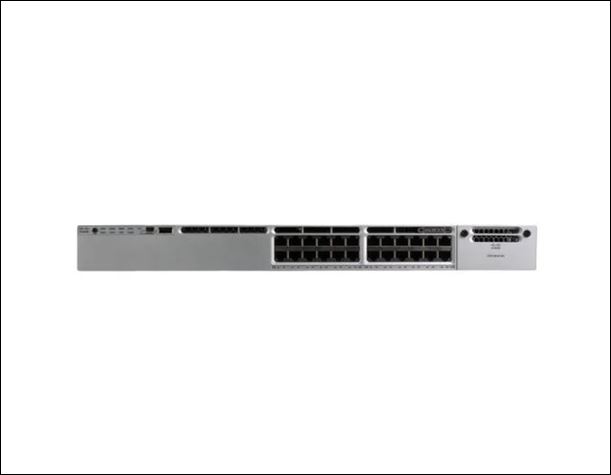
Modern businesses depend on fast, reliable, and secure networks to support daily operations. From connecting computers and servers to enabling cloud applications and wireless access points, network switches play a critical role in keeping everything connected. Cisco has long been recognized as one of the leading networking manufacturers, offering a broad portfolio of switches designed for businesses of every size.
With so many Cisco switch models available, selecting the right one can seem challenging. Each model is built for specific environments, performance requirements, and network sizes. Understanding the available options helps organizations invest in a solution that delivers scalability, security, and long-term value.
This guide explains the different Cisco switch models, their key features, and how to choose the best option for your networking needs.
Understanding Cisco Switch Models
Cisco switches are designed to connect devices within a Local Area Network (LAN) while efficiently directing data traffic between them. Unlike simple unmanaged switches, Cisco switches provide advanced management capabilities, enhanced security, and high-performance connectivity for modern business environments.
Cisco offers switches for:
- Small businesses
- Medium-sized organizations
- Enterprise campuses
- Data centers
- Branch offices
- Industrial environments
- Cloud-managed networks
Each category includes models tailored to different performance and management requirements.
Popular Cisco Switch Series
Cisco manufactures several switch families that serve different networking purposes.
Cisco Catalyst Series
The Cisco Catalyst Series is one of the most widely used enterprise switch families. These switches are designed for campus networks, office environments, and branch locations.
Key benefits include:
- Layer 2 and Layer 3 switching
- Power over Ethernet (PoE)
- High-speed Gigabit and Multi-Gigabit connectivity
- Advanced network security
- Software-defined access capabilities
- Reliable scalability
Popular Catalyst models include:
- Cisco Catalyst 9200 Series
- Cisco Catalyst 9300 Series
- Cisco Catalyst 9400 Series
- Cisco Catalyst 9500 Series
- Cisco Catalyst 9600 Series
These switches support organizations ranging from small offices to large enterprise campuses.
Cisco Nexus Series
Cisco Nexus switches are built specifically for data centers.
They provide:
- Low-latency switching
- High-density ports
- 10G, 25G, 40G, 100G, and higher-speed connectivity
- Virtualization support
- Cloud networking integration
- Storage networking capabilities
Nexus switches are commonly deployed in large enterprise data centers and cloud environments where high performance is essential.
Key Features to Look for in Cisco Switch Models
When evaluating Cisco switch models, businesses should consider several important features.
Power over Ethernet (PoE)
Many Cisco switches provide PoE support, allowing devices such as:
- IP phones
- Wireless access points
- Security cameras
- IoT devices
to receive both power and network connectivity through a single Ethernet cable.
This reduces installation costs while simplifying network infrastructure.
Layer 2 and Layer 3 Switching
Layer 2 switches manage communication within the same network.
Layer 3 switches also perform routing between different networks, making them suitable for larger organizations requiring advanced traffic management.
Advanced Security
Cisco integrates multiple security technologies into its switches, including:
- Access Control Lists (ACLs)
- Port Security
- MAC Authentication
- 1X Authentication
- Secure segmentation
- Threat detection integration
These features help protect sensitive business data from unauthorized access.
Network Automation
Many modern Cisco switches support automation tools that simplify configuration, software updates, policy enforcement, and network monitoring.
Automation reduces manual administrative work while improving operational efficiency.
Choosing the Right Cisco Switch
Selecting the right Cisco switch depends on your organization’s specific networking requirements.
Consider the following factors:
Business Size
Small businesses generally require fewer ports and simpler management features.
Large enterprises often need stackable switches, redundancy, and advanced routing capabilities.
Number of Connected Devices
Estimate the number of devices connected today while allowing room for future expansion.
Network Speed
Businesses using cloud applications, video conferencing, or large file transfers may require:
- Gigabit Ethernet
- 10 Gigabit uplinks
- Multi-Gigabit access ports
Power Requirements
If your network includes wireless access points, IP cameras, or VoIP phones, choose PoE-capable models.
Management Requirements
Managed Cisco switches provide:
- Remote administration
- VLAN configuration
- Traffic monitoring
- Performance reporting
- Security policy management
These capabilities are valuable for growing businesses.
Benefits of Cisco Switch Models
Organizations worldwide choose Cisco switches because they offer numerous advantages.
Reliability
Cisco switches are engineered for continuous business operation with minimal downtime.
Scalability
Businesses can easily expand their networks by adding stackable switches and higher-capacity models as requirements grow.
Security
Integrated security features help reduce cyber risks while supporting regulatory compliance.
High Performance
Cisco switches deliver reliable data transmission with low latency, supporting demanding applications such as video conferencing, cloud computing, and virtualization.
Simplified Network Management
Centralized management tools help IT teams configure, monitor, troubleshoot, and maintain network infrastructure efficiently.
Industries That Use Cisco Switch Models
Cisco switches are widely deployed across many industries, including:
- Healthcare
- Banking and financial services
- Education
- Government
- Retail
- Manufacturing
- Hospitality
- Telecommunications
- Logistics
- Technology companies
Their flexibility allows organizations to build secure and scalable networks regardless of industry.
Future-Proofing Your Network
Technology continues to evolve rapidly.
Businesses adopting cloud computing, artificial intelligence, Internet of Things (IoT), and hybrid work environments require networking equipment capable of supporting increased bandwidth and more connected devices.
Modern Cisco switch models are designed with future growth in mind through:
- Software upgrades
- High-speed uplinks
- Modular expansion
- Advanced security
- Cloud management capabilities
- Automation support
Choosing the right switch today reduces the need for expensive network upgrades in the future.
Final Thoughts
Selecting the right Cisco switch models is an important investment in your organization’s IT infrastructure. Cisco offers solutions for businesses of every size, from small offices requiring basic connectivity to enterprise data centers demanding high-speed, resilient networking.
When evaluating Cisco switches, consider your organization’s current network size, future growth plans, performance requirements, security needs, and management capabilities. Features such as PoE, Layer 3 routing, automation, and centralized management can significantly improve operational efficiency while supporting long-term scalability.
By investing in the appropriate Cisco switch model, businesses can build a secure, reliable, and high-performing network that supports modern applications and future technological advancements.
Frequently Asked Questions (FAQs)
1. What are Cisco switch models?
Cisco switch models are networking devices designed to connect computers, servers, wireless access points, IP phones, and other devices within a network while providing reliable data communication and advanced management features.
2. Which Cisco switch series is best for enterprise networks?
The Cisco Catalyst Series is widely used for enterprise campus and office networks, while the Cisco Nexus Series is designed for high-performance data center environments.
3. What is the benefit of Power over Ethernet (PoE) in Cisco switches?
PoE allows devices such as IP phones, wireless access points, and security cameras to receive power and network connectivity through a single Ethernet cable, reducing installation costs and simplifying cabling.
4. How do I choose the right Cisco switch model?
Consider factors such as business size, number of connected devices, network speed requirements, PoE needs, security features, scalability, and centralized management capabilities before selecting a Cisco switch.
5. Why are Cisco switches popular for business networks?
Cisco switches are known for their reliability, advanced security, scalability, high performance, automation capabilities, and comprehensive network management features, making them suitable for businesses of all sizes.
