










When a firewall failure leaves a branch office exposed or a new site needs to go live this week, choosing the right FortiGate 80F UK supplier stops being a browsing task and becomes a procurement decision with real operational impact. Price matters, but so do licensing clarity, stock accuracy, hardware condition, and how quickly the unit can be dispatched when the window to install is tight.
Why the FortiGate 80F stays on so many shortlists
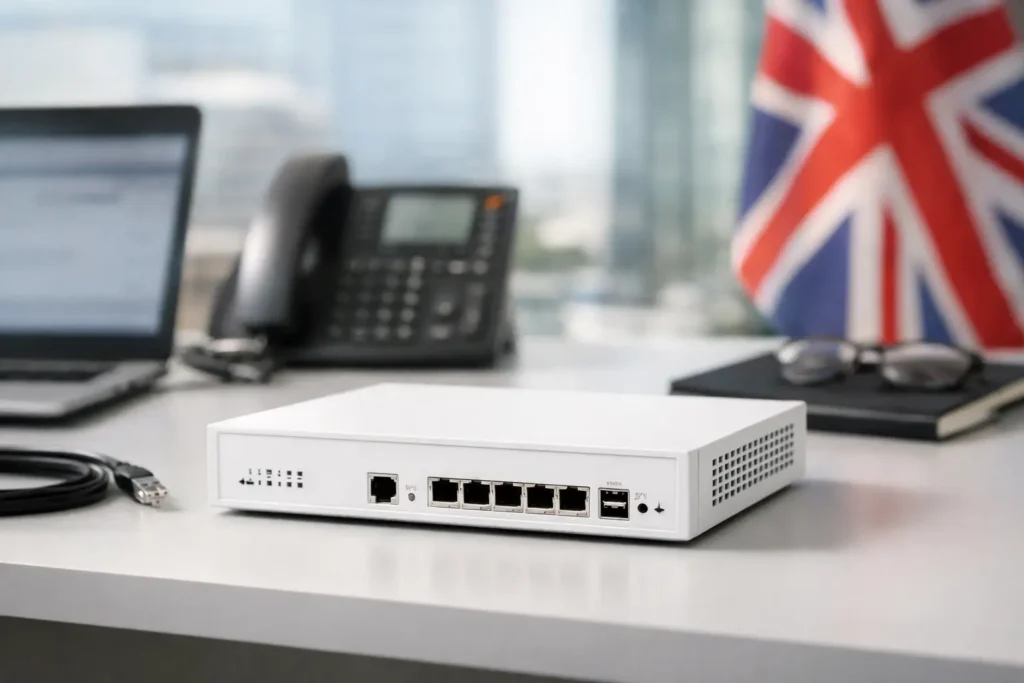
The FortiGate 80F sits in a practical sweet spot for small and mid-sized deployments. It is compact enough for branch and edge use, but capable enough for organisations that need serious throughput, SD-WAN capability, VPN performance, and the wider Fortinet security stack. The Fortinet FortiGate 80F Firewall is a popular choice for branch offices and growing businesses that need advanced security, VPN connectivity, and SD-WAN functionality. That balance is exactly why buyers keep coming back to it for office refreshes, replacement rollouts, and standardised multisite deployments.
For network teams, the attraction is not just the appliance itself. It is the predictability of the platform. If you already run Fortinet elsewhere, the 80F fits neatly into an existing estate with familiar management, policy structure, and security services. If you are moving from another vendor, it often appears on the shortlist because it offers enterprise-recognised security without forcing you into oversized hardware for a modest site.
What to expect from a FortiGate 80F UK supplier
A serious supplier should do more than list a part number and a price. For this class of firewall, buyers usually need confirmation on model variant, subscription status, condition, and lead time before they can raise a purchase order. If those details are vague, the cheap headline price can become an expensive delay.
Stock visibility is the first checkpoint. Some retailers advertise broad availability but actually rely on extended back-order channels. That may be workable for planned projects, but less so for hardware refresh deadlines or failed-unit replacements. If you need the appliance quickly, look for a supplier that distinguishes between in-stock, incoming, and special-order units rather than grouping everything under a generic availability label.
Licensing is the second checkpoint, and it is where many purchases become muddled. A FortiGate 80F may be sold as hardware-only, or bundled with security subscriptions and support periods. Buyers should know exactly whether they are pricing the appliance, the appliance plus FortiCare, or a package that includes broader protection services. If the listing is not explicit, you are not comparing like with like.
Warranty terms also deserve attention. For procurement teams and MSPs, warranty is not a marketing extra – it is part of risk control. Especially when sourcing cost-efficient or used enterprise hardware, the supplier should state whether the unit is new, refurbished, recertified, or surplus stock, and what return or replacement cover applies.
New, used, or refurbished – the right choice depends on the job
Not every deployment needs a factory-sealed appliance. For some buyers, a new FortiGate 80F with full support eligibility is the only acceptable option, especially in regulated environments, customer-facing services, or standardised corporate frameworks. In those cases, the premium buys consistency and often simplifies internal approval.
For other use cases, refurbished or quality-tested used hardware can make strong commercial sense. A lab environment, a lower-risk branch, a temporary project site, or a budget-constrained refresh may not justify paying top-tier pricing. The key point is not whether the unit is pre-owned. It is whether the supplier tests it properly, describes the condition honestly, and backs it with a clear warranty and returns process.
That is where a broad online reseller can be useful. Businesses that source across current and used enterprise stock often give buyers more room to balance spend against urgency and deployment need. Green Code UK, for example, operates in exactly that space – broad hardware inventory, branded equipment, and pricing that suits buyers who care as much about value as they do about model accuracy.
How to compare FortiGate 80F UK supplier options properly
The fastest way to waste budget is to compare only on the unit price. Buyers comparing Fortinet hardware may also find our Buy FortiGate UK: What to Check First guide useful when reviewing stock availability, licensing options, and supplier selection criteria. A better method is to look at the full procurement picture. Start with the exact model and confirm whether the appliance matches your intended deployment, including interface expectations and service requirements. Then verify whether subscriptions are included, optional, expired, or not part of the offer at all.
After that, look at fulfilment speed. A low price with a two-week delay is not much use if your migration is booked for Friday night. Dispatch cut-off times, real UK stock holding, and replacement handling can matter more than saving a small percentage on the ticket price.
Finally, weigh after-sales reliability. If you are buying for one office, that may mean straightforward returns. If you are buying for multiple sites or customers, it may mean consistency of supply and the ability to source matching units again. MSPs and repeat buyers often value that more than a one-off bargain.
Questions worth asking before you place the order
Ask whether the appliance is physically in stock in the UK, whether the serial status affects support registration, and whether any security bundle is attached to the SKU. Ask how the unit is packaged, what accessories are included, and whether rack or power requirements need separate ordering. These are small details until a deployment is delayed because a missing item was treated as assumed rather than confirmed.
It is also sensible to ask about returns on compatibility issues. Experienced buyers know their specifications, but mixed estates and urgent replacements can still create edge cases. A practical supplier will answer directly rather than hiding behind generic sales language.
Common buying scenarios for the FortiGate 80F
For a small business upgrading from an ageing firewall, the 80F is often chosen as a performance and security step-up without moving into oversized branch hardware. Organisations with lighter security and performance requirements may also consider the Fortinet FortiGate 60F Firewall as a cost-effective alternative for smaller deployments. In that case, the best supplier is usually the one offering a clear bundle and quick dispatch rather than the one with the most complicated product matrix.
For MSPs, the decision is usually different. Repeatability matters. If you are standardising client deployments around one appliance class, you need dependable access to the same model, commercially sensible pricing, and enough specification clarity to quote accurately. A supplier that carries both current stock and replacement inventory can help keep customer rollouts consistent.
For enterprise procurement teams, the focus is often governance. They need exact SKU alignment, dependable paperwork, known warranty terms, and predictable supply. Here, a bargain that arrives with unclear origin or uncertain support status is rarely worth the internal friction it causes.
Price matters, but context matters more
The FortiGate 80F is not a low-consideration purchase. Buyers looking for the lowest advertised figure can end up paying more if the unit ships late, excludes expected services, or cannot be used in the intended support framework. On the other hand, paying top price by default is not automatically the right move either.
A good supplier helps you make the right trade-off. Sometimes that means a discounted hardware-only unit for an existing licensed environment. Sometimes it means paying more for a bundled subscription, UK-held stock, and faster replacement protection. The right answer depends on what failure, delay, or mis-specification would cost your business.
Signs you have found the right supplier
The strongest signal is clarity. The listing should identify the product properly, the condition should be stated plainly, and the commercial terms should not need decoding. Buyers in networking and security do not need inflated claims. They need exact model information, realistic lead times, and the confidence that what arrives is what was ordered.
The next signal is range. A supplier with real depth in enterprise hardware usually understands adjacent requirements as well. If your firewall purchase also involves optics, switches, wireless, rack accessories, or replacement components, it helps to work with a seller that already operates across that broader infrastructure estate. That reduces procurement fragmentation and can make future sourcing easier.
Lastly, look for practical buying support. Warranty messaging, returns reassurance, and straightforward payment options are not just checkout extras. They reduce friction for teams buying under time pressure or fixed budgets, and they matter when a single order turns into an ongoing purchasing relationship.
If you are sourcing a FortiGate 80F, buy from a supplier that treats the appliance as more than a box on a shelf. The right stock position, the right licensing detail, and the right commercial terms will save more time than a marginal discount ever will.
FAQ
Q1: What should I look for in a FortiGate 80F UK supplier?
A: Check stock availability, licensing details, warranty terms, and delivery times.
Q2: Is the FortiGate 80F suitable for branch offices?
A: Yes. It offers strong security, VPN support, and SD-WAN capabilities.
Q3: Should I buy a new or refurbished FortiGate 80F?
A: It depends on your budget, support needs, and deployment requirements.
Q4: Does the FortiGate 80F require subscriptions?
A: Yes, if you need advanced security services and support coverage.
Q5: Why is supplier selection important?
A: The right supplier helps ensure accurate ordering, faster deployment, and reliable support.
