












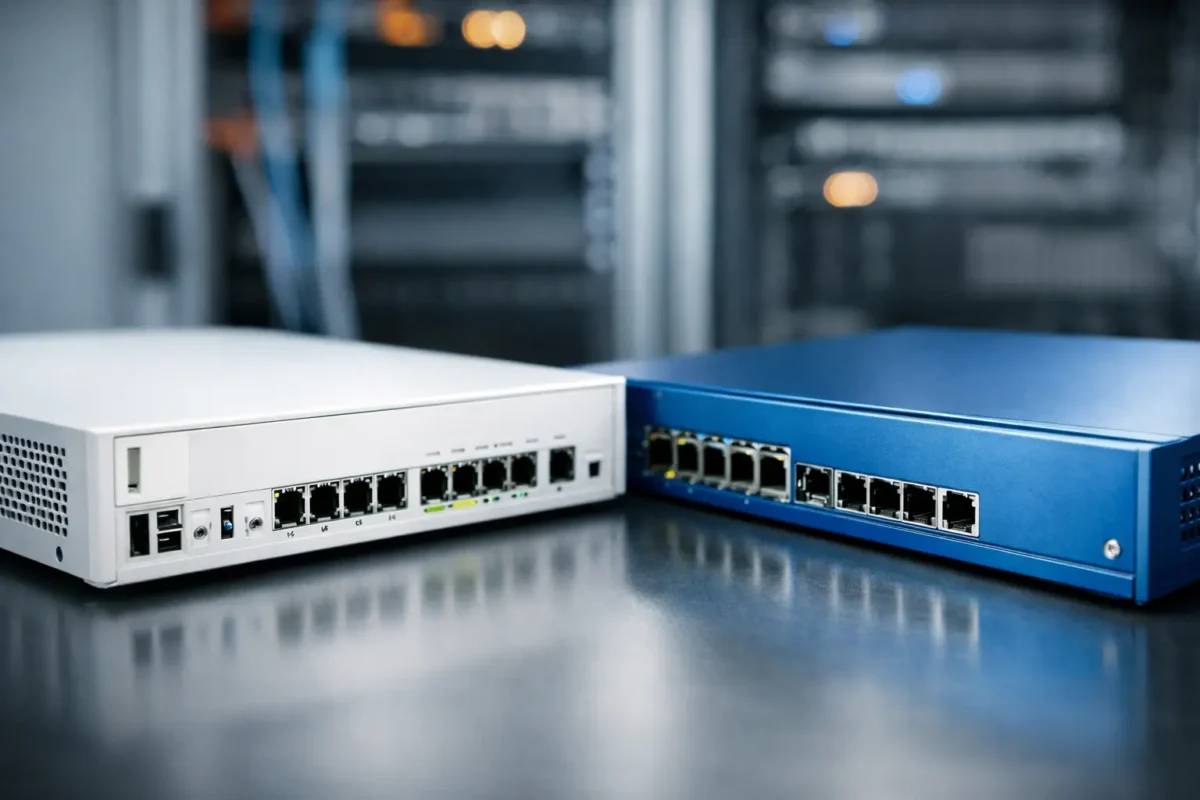
If you are weighing up fortinet vs palo alto firewall options, the real question is not which brand is better on paper. It is which platform fits your traffic profile, security stack, in-house skills and renewal budget without creating procurement drag six months later. Both vendors are established, both have strong enterprise credibility, and both can be the right buy. The difference usually shows up in how you deploy, manage and scale.
Fortinet vs Palo Alto firewall for real-world buying
For most IT buyers, this comparison starts with a shortlist, a model number and a budget ceiling. A branch refresh, an edge replacement, an SD-WAN rollout or a data centre security review will quickly narrow the field. Fortinet often enters the conversation when value per gigabit, hardware choice and broad security integration matter. Palo Alto typically comes forward when advanced application control, policy granularity and a strong security operations fit are higher priorities.
That does not make this a simple price-versus-features argument. In practice, some teams overbuy Palo Alto capacity they never use, while others buy Fortinet appliances cheaply and then under-scope subscriptions or management. The better decision comes from matching the firewall to the environment rather than the badge.
Performance and hardware range
Fortinet has long been strong where buyers want aggressive throughput for the money. The FortiGate range covers small office units through to large enterprise and service provider platforms, and the portfolio is broad enough that it is usually possible to find a model that lands close to the required port mix, inspection throughput and rack profile. That matters if you are buying for multiple branches or standardising around repeatable deployments.
Palo Alto also offers a capable hardware line-up, but buyers often view it through a different lens. The appeal is less about headline appliance value and more about the quality of the software stack and enforcement logic. If your environment depends on detailed traffic classification and policy based on applications, users and content controls, Palo Alto can justify the premium.
In smaller estates, Fortinet can be attractive because the platform scales down efficiently. In larger and more security-mature estates, Palo Alto may win because the extra operational intelligence has a clearer return. The trade-off is straightforward: Fortinet is often easier to justify in a hardware-led purchasing cycle, while Palo Alto is easier to justify in a security-led one.
Throughput figures need context
Datasheet comparisons can mislead if you compare raw firewall throughput instead of inspected traffic under real services. SSL inspection, intrusion prevention, malware filtering and logging all change the picture. A lower-cost appliance that looks fast in a basic spec line may behave very differently once the full policy set is active.
This is where experienced buyers slow down. If the firewall will be running mixed traffic, remote access VPN, east-west segmentation or heavy encrypted sessions, ask what the platform looks like under those conditions. A cheaper box that needs replacing early is not a bargain.
Security features and policy depth
Palo Alto has a strong reputation for application awareness and policy definition. Many teams like the clarity of building policy around what traffic actually is, not just where it is going. In estates where shadow IT, SaaS sprawl and user-level visibility are persistent problems, that approach can reduce ambiguity and help security teams tighten controls without writing overly broad rules.
Fortinet is no lightweight here. FortiGate appliances provide a mature set of threat prevention and filtering features, and for many organisations the practical outcome is more than sufficient. If your goal is reliable perimeter security, VPN, segmentation and integrated services without overcomplicating administration, Fortinet remains a serious contender.
The gap often shows up at the edges. Palo Alto may suit organisations that want deeper policy inspection and are willing to pay for it. Fortinet may suit those that want a wide set of capabilities in a platform that is easier to cost across multiple sites.
Ecosystem matters more than feature checklists
Security products do not operate alone for long. If you are already invested in a vendor’s wider stack, the firewall decision becomes easier. Fortinet can be compelling if you are standardising with FortiSwitch, FortiAP, FortiManager or other Fortinet components and want tighter integration from branch to edge. Palo Alto makes more sense when the firewall is part of a broader security operations design that includes advanced analytics and cloud-delivered controls.
For procurement teams, this is where total platform direction matters more than isolated feature wins. Buying the strongest single appliance is not always the same as buying the best operational fit.
Management, deployment and day-to-day admin
A firewall that tests well but frustrates your admins will cost more over time. Fortinet is often chosen by teams that want a platform they can deploy quickly, repeat across sites and administer without excessive overhead. That can be especially useful for MSPs, lean internal IT teams and organisations rolling out standard branch templates.
Palo Alto is typically favoured where teams want richer policy logic and are comfortable with a more deliberate approach to configuration and control. In the right hands, that depth is a strength. In a stretched IT team, it can become friction.
This is not about one interface being good and the other bad. It is about operational fit. If your team is small, reactive and juggling networking with general infrastructure support, Fortinet may reduce time spent on routine tasks. If you have dedicated security engineering resources and formal change control, Palo Alto may deliver better long-term policy discipline.
Licensing and long-term cost
This is where many buying decisions are won or lost. Hardware price is only the start. Subscription bundles, support entitlement, central management, logging retention and renewal costs all shape the real spend over three to five years.
Fortinet is often attractive to cost-conscious buyers because the entry point can be lower and the value across distributed sites is strong. That matters for schools, retail estates, growing businesses and MSP environments where appliance count multiplies quickly. If your project involves dozens of units, a small per-device saving becomes significant.
Palo Alto generally commands a premium, and many buyers accept that because they see the software value as part of the product, not an add-on. The problem comes when the business wants enterprise-grade controls but has SMB-grade renewal tolerance. If the recurring cost causes delayed renewals or reduced service coverage, the design weakens.
A sensible comparison does not ask which firewall is cheaper. It asks which one you can afford to run properly for the full term.
Which firewall suits which environment?
Fortinet usually fits best where price-performance matters, site counts are growing, and teams want solid security with efficient deployment. It is a strong option for branch offices, distributed enterprises, smaller data centre roles and buyers looking for branded hardware at a sharper spend profile. It also suits refresh projects where model availability, replacement flexibility and procurement speed matter.
Palo Alto usually fits best where application-level visibility is central, security policy is tightly governed and the firewall is part of a broader security architecture rather than a standalone gateway purchase. It is often a better match for organisations with mature security operations, strict segmentation requirements or high-value traffic flows that justify premium inspection and control.
There is overlap, of course. Either vendor can serve SMB, enterprise and hybrid use cases. The deciding factors are usually management style, security maturity and budget discipline.
Buying advice before you commit
If you are choosing between these platforms, start with the workload and the operating model, not the marketing sheet. Define your expected inspected throughput, VPN needs, interface requirements, branch count, HA plan and licensing term. Then test whether your team can realistically manage the platform at the level the vendor expects.
Also look at availability. In some projects, the best firewall is the one you can source in the right model, with the right support path, without stalling a migration window. That is especially true for refresh cycles, failover replacements and budget-year purchasing where lead times can derail the plan.
For buyers comparing new, surplus or replacement enterprise hardware, Green code UK typically sees the strongest decisions come from clear model matching and realistic lifecycle costing. Brand preference matters, but deployment fit matters more.
The right answer in fortinet vs palo alto firewall decisions is usually the one that keeps security coverage high, admin overhead sensible and renewals manageable long after the appliance arrives.
